
5 Ocean Activities That Can Feel Like Meditation
Aliya Siddiqi
A brief guide on how some of your favourite ocean activities can act as a meditation practice
Meditation is often pictured as sitting quietly in a room, eyes closed, focusing on your breath. Easier said than done. Sometimes your mind or environment can draw you away, and while guided meditations are helpful to overcome that, there is a reason many of us are drawn to ocean activities as a way to “feel good”.
Blue mind theory attributes being in or near bodies of water to increased feelings of calmness, compassion, and creativity. So if you find yourself unable to meditate in the stereotypical way, this guide will help link how ocean activities can support your meditation practice.
Swimming
Level of difficulty: 1/5
Tools: Awareness and repetition
Whether you choose to go in for a quick dip or prefer full marathon-esque ocean swims, swimming has been found to have numerous health benefits. As a full-body workout without the impacts of gravity, it’s extremely helpful for cardiovascular and joint health, and is one of the most accessible sports across age and ability.
But there is also something to be said for the repetition of movement while immersed in water. The consistent movement helps maintain focus, clears your mind, and supports mindfulness of your physical body rather than everything else going on around you.
The breathwork that goes along with swimming also provides a nice access point to meditation. You can control your strokes and breath to anchor your mind, and finding a pattern that works for the movement helps prevent your mind from wandering too far away.
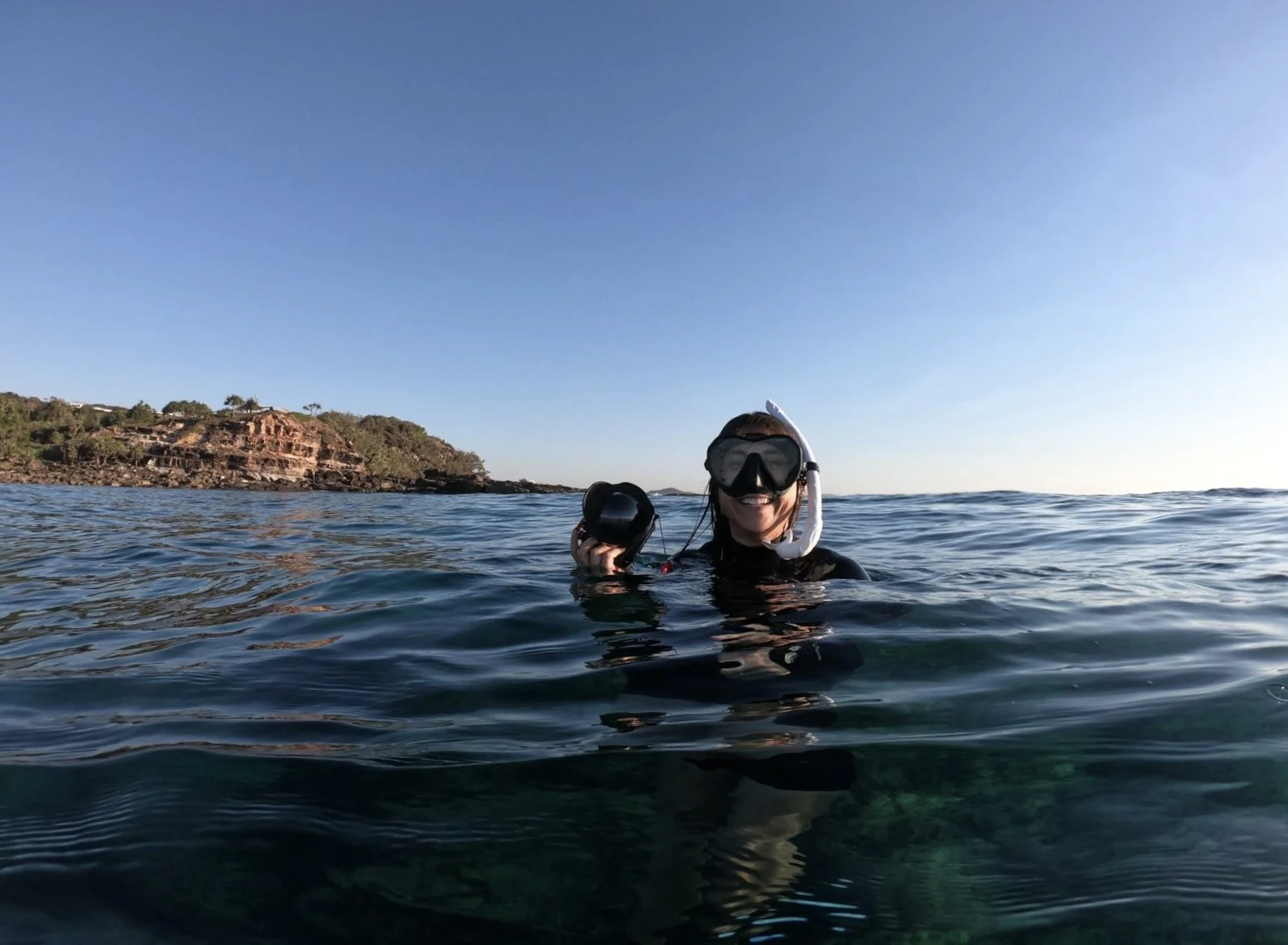
When the waves were flat, a friend and I went out for a snorkel exploration to our local reefs and found a stunning, clear reef with wobbegongs, fish, and crayfish.
2. Snorkelling
Level of difficulty: 2/5
Tool: Curiosity and presence
For many people who visit the ocean for the first time, it is incredibly hard not to stick your head underwater and see what’s happening beneath the surface. Snorkelling is one of the most accessible ways to start to see the ocean, as you need minimal equipment and it can be done in very shallow waters.
Many marine scientists attribute their first snorkelling experiences and witnessing the colours of a coral reef, hundreds of tropical fish or, for the really lucky ones, large marine animals, as the impetus for falling in love with the ocean. And there’s a reason why kids love it too. It embodies the innocent and curious nature humans have before life brings distraction and overwhelm.
In an age of technology and low attention spans, immersion in the ocean removes the barrier to focus. There is truly nothing to do but be present, look around, and see what inhabits the waters beneath you.
A meditation practice is an invitation to notice where you are in that moment, and cultivate an awareness of self within that environment. Snorkelling does the same thing. You leave land to enter a different world that supports presence and introduces a curiosity to what lies beneath the surface.
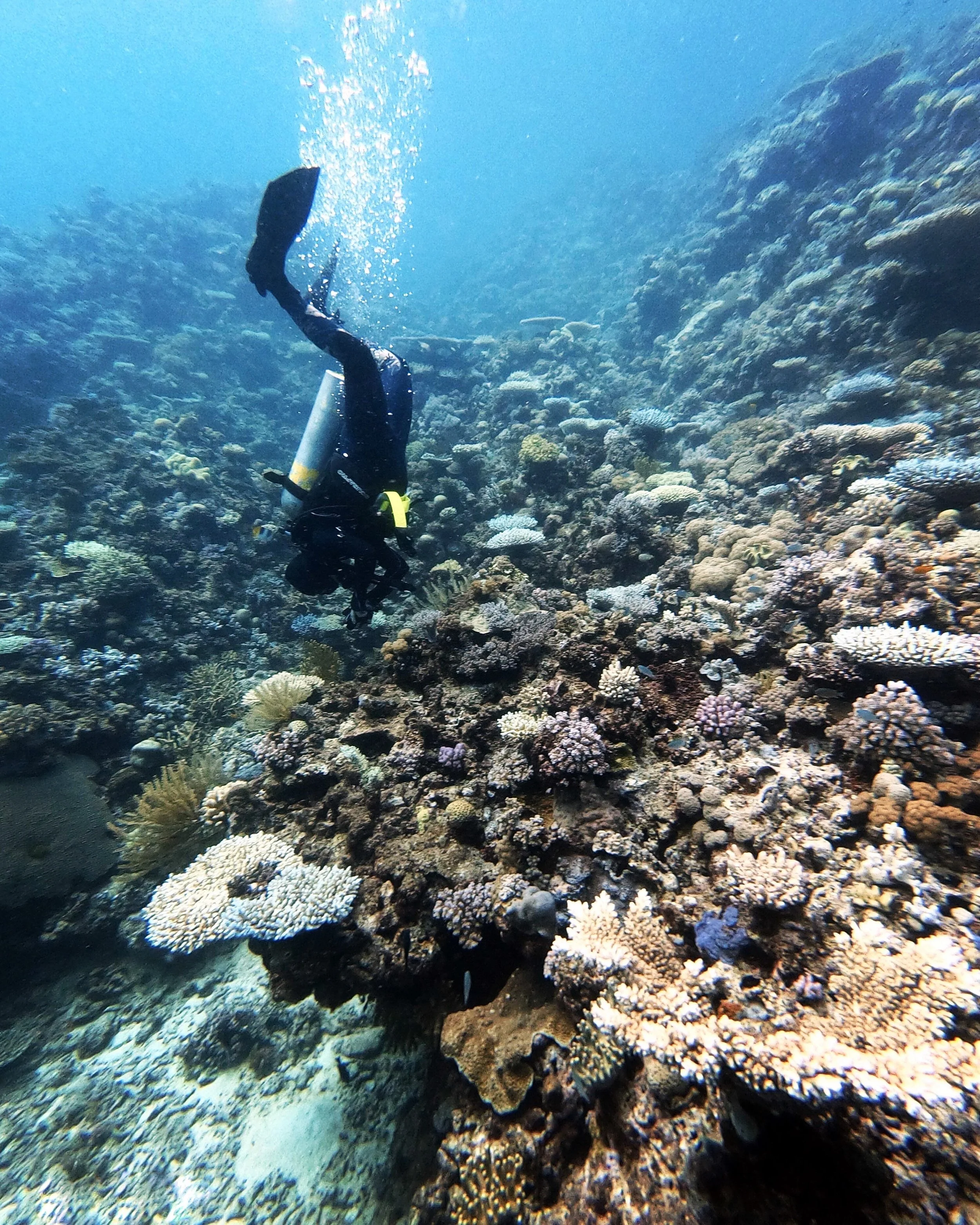
Buoyancy control, thanks to breathwork, in scuba diving allows me to flip upside down without touching the reef. You never know what you may find hiding amongst corals in the Great Barrier Reef.
3. Scuba Diving
Level of difficulty: 3/5
Tools: Presence and self-awareness
Scuba diving requires proper training and instruction, but once learned, it is accessible long into the future. Invented in the early 1940s by Jacques Cousteau’s team, scuba diving is a relatively modern ocean activity. But the true beauty of it was being able to stay underwater for longer. You were not working off of a single breath.
Fully submerged underwater, there is only you, your gear, and the amazing marine world around you. Without any additional items, such as photography gear, you are forced to become present. While this may take some time for new divers to perfect, your breath becomes your path to physical self-awareness.
Buoyancy is a key part of scuba diving safely and sustainably. Beginners often play around with the air in their BCD, but seasoned divers can look closely at the intricacies of the reef (or a nudibranch!) simply by playing with their own breath. Exhaling to sink closer and inhaling to lift away from it.
Personally, out of all the activities listed here, scuba diving is the one where I feel most calm and at peace. Maybe it’s the levitation, or the comfort I’ve developed over hundreds of dives, but sitting below the surface alongside the creatures that inspire me is what allows me to sink into that meditative state.
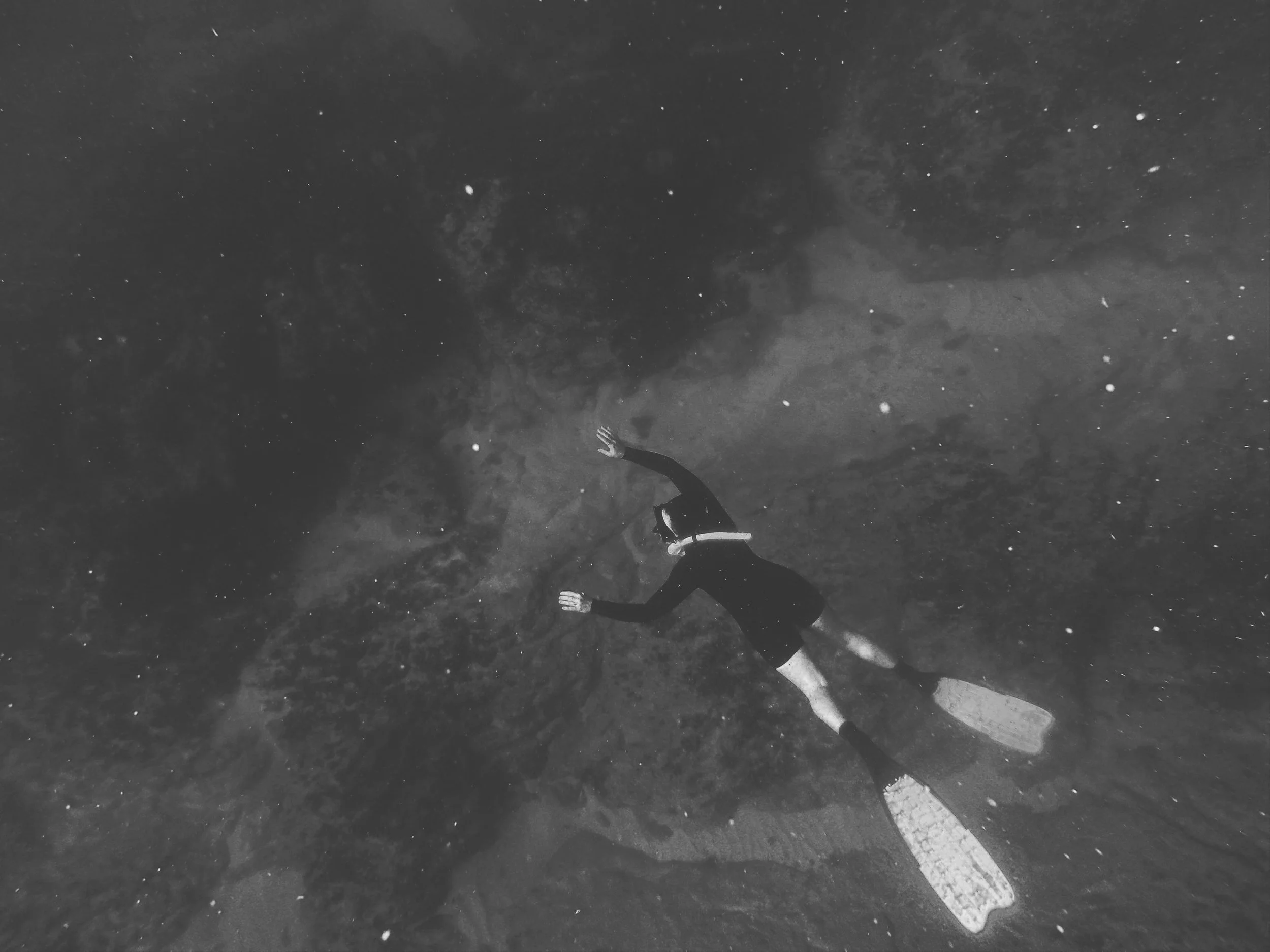
Freediving amongst a shallow reef along the Sunshine Coast where holding my breath in the underwater world invites calmness. It’s also what’s necessary to stay under for longer periods of time.
4. Freediving
Level of difficulty: 4/5
Tools: Presence, awareness, and breathwork
True freediving requires formal techniques and professional instruction, but relies on the basic act of simply holding your breath as you go underwater. It can be seen as a somewhat extreme activity, with professional athletes seeking deeper depths, spearfishers hunting in the ocean, or even sports like underwater rugby.
Most meditation tools are utilised by freedivers in order to go deeper for longer, and to practice being able to push through the discomfort of holding your breath. It requires persistence and humility to develop the skill, but the tools you gain are based in breathwork and meditation.
In a TED Talk by William Trubridge, he speaks about the presence that this activity requires. A focus on body movements and energy expenditure, as well as a journey into both literal and metaphorical depths. It opens the space for self-awareness with nothing to focus on beyond the pressure of the ocean as you go further down and the control of your breath. Freediving requires a calmness in your mind to remove yourself from the discomfort and fear.
We are all just human with the basic need for oxygen. But manipulating that basic need is where your mind can unlock a new level in the depths of your mind.
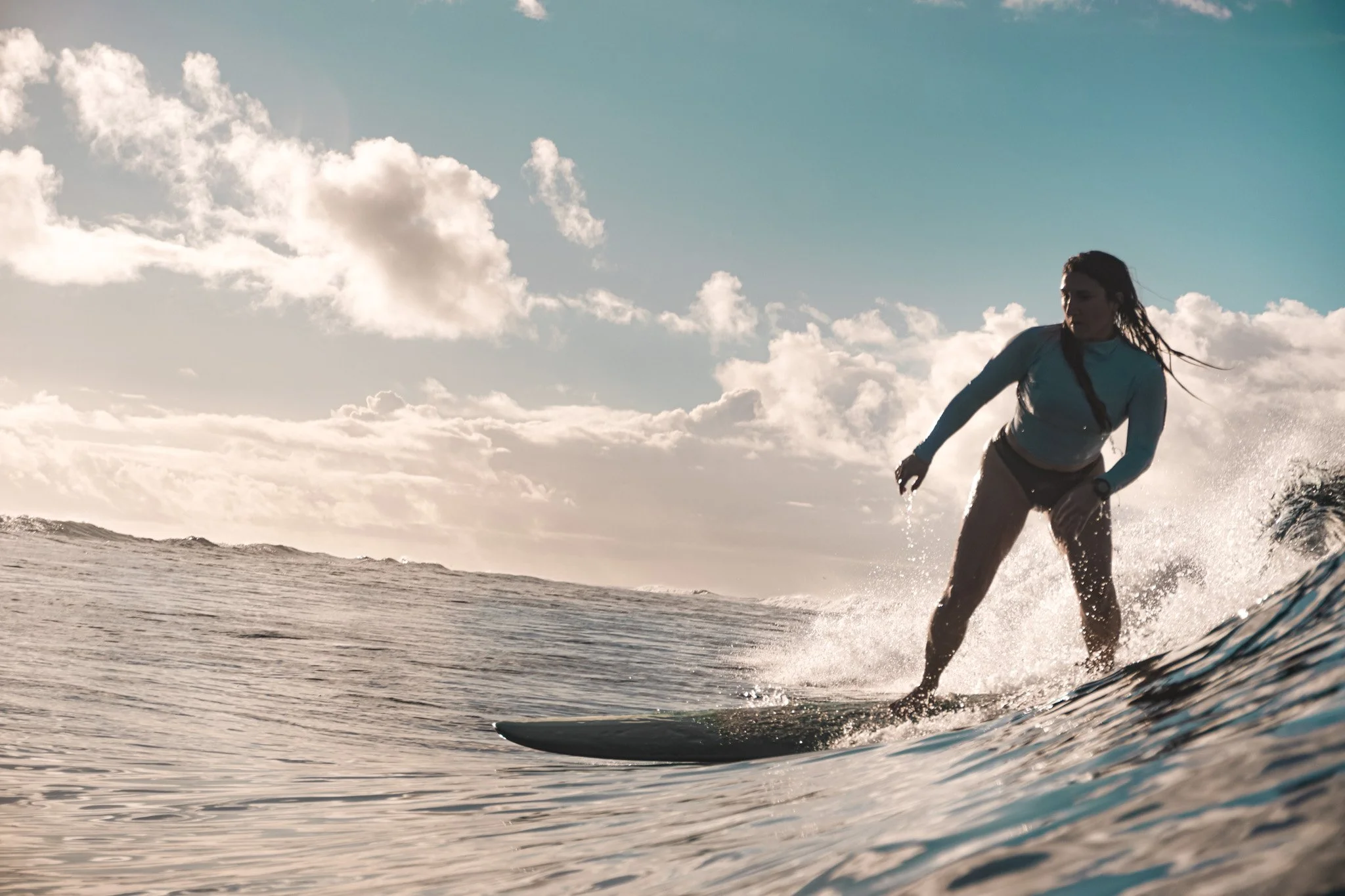
Surfing has never been an easy journey, and I still find myself struggling to attain progress, but it’s always the most rewarding.
5. Surfing
Level of difficulty: 5/5
Tools: Persistence and humility
If you didn’t begin surfing as a child, or even if you did, it’s one of the most confronting ways to interact with the ocean.
Many long-time surfers acknowledge the disparity between beginner, intermediate, and advanced to expert-level surfing. It not only requires access to a coastline with somewhat consistent waves, but also learning that those waves never behave the same way. Before you even get into the water, surfers have to consider the swell, tides, and winds, gain knowledge of how the waves break, and know who typically surfs there.
Surfing is also one of the sports that gives you the least amount of payoff for how much work you put in. Especially if you’re starting later in life, you have to be okay with looking a bit silly and accept the uphill battle you’ve decided to embark on, while simultaneously watching other surfers easily catch wave after wave.
However, it is exactly those fleeting moments of joy on the wave that keep a surfer out there hoping for “one more wave”. You are no longer fighting with the energy of the ocean that has caused you so much struggle; it has now become your source of joy.
Meditation is described as the practice of awareness, and surfing is one of the best representations of it. Humility and persistence are the tools, and catching the wave is the ultimate state of joy and clarity, and is the reminder of why the practice is worth it. A sign at a local surf school in Lombok, Indonesia, said it best:
You surf, you drown, you surf again.
Any activity has the opportunity to calm your mind
Meditation does not have to be limited to sitting on a pillow in a quiet room with your eyes shut. Swimming creates repetition that can calm your thoughts, snorkelling creates presence and curiosity, scuba diving offers weightless immersion, freediving helps you focus on your breath, and surfing offers opportunities for persistence and acceptance.
While these activities may not fit a stereotypical understanding of meditation, the goals of the practice remain the same: cultivating focus and calm within the mind.
As E.O. Wilson noted in his famous work, Biophilia,
“To explore and affiliate with life is a deep and complicated process in mental development. To an extent still undervalued in philosophy and religion, our existence depends on this propensity, our spirit is woven from it, hope rises on its currents.”
Look out for more articles from Aliya Siddiqi and follow her on Instagram.
Want to write for us? Check out our ‘Get Involved’ section.