
Rethinking Seafood: Better Choices for a Healthier Ocean
Maia Michelis
Seafood is a well-known and important source of protein, omega-3 fatty acids, vitamins, and minerals, but rising demand has exponentially increased pressure on marine ecosystems. Almost 30% of global fish stocks are overfished, while a further 60% are being fished at their maximum capacity. Climate change, pollution, and declining marine populations add to these pressures.
Our daily food choices therefore matter because seafood is not one uniform category. The environmental consequences of eating marine foods depend on the species, where it comes from, and how it was caught or produced. That's why what, when, and how we choose the food that ends up on our plates can make a very big difference.
Key Takeaways
Choose seafood wisely. The environmental impact of seafood depends on the species, where it comes from, and how it is produced, not simply whether it is wild-caught or farmed.
Consider bivalves. Mussels, oysters, and clams require no external feed, have relatively low environmental impacts, and can even provide ecosystem benefits under responsible management.
Try seafood swaps. Replacing high-impact seafood with low-impact species, plant-based alternatives, or responsibly farmed shellfish can help reduce pressure on marine ecosystems.
Explore plant-based seafood. Alternatives made from legumes or algae may reduce demand for wild fisheries, but many still need improvements in nutrition, taste, affordability, and scalability.
There is no single solution. Healthier oceans will depend on a combination of informed consumer choices, sustainable aquaculture, greater seafood diversity, and continued innovation.
Not All Seafood Is Equally Sustainable
A lot of research has concluded that bivalves, like mussels and oysters, are among the most sustainable animal proteins. Bivalves are aquatic mollusks with a soft body enclosed in a two-part hinged shell and don't require any external feed. Instead, they filter natural particles and phytoplankton from the water. This makes them less dependent on land, freshwater, and feed crops than many other animal-protein systems.
Bivalves can also provide environmental benefits. They may recycle nutrients, reduce eutrophication (the over-enrichment of water by nutrients generally coming from sewage, waste, and fertiliser runoff), support coastal ecosystems, and contribute to carbon sequestration. They are also nutritionally valuable, supplying protein, omega-3 fatty acids, iron, zinc, and vitamin B12.
However, shellfish should not be treated as automatically sustainable in every situation. Mussel and oyster farming can still be affected by climate change, ocean acidification, pollution, harmful biological events, invasive species, and changes in salinity or temperature. Sustainability depends on responsible management and the conditions of the specific production site.
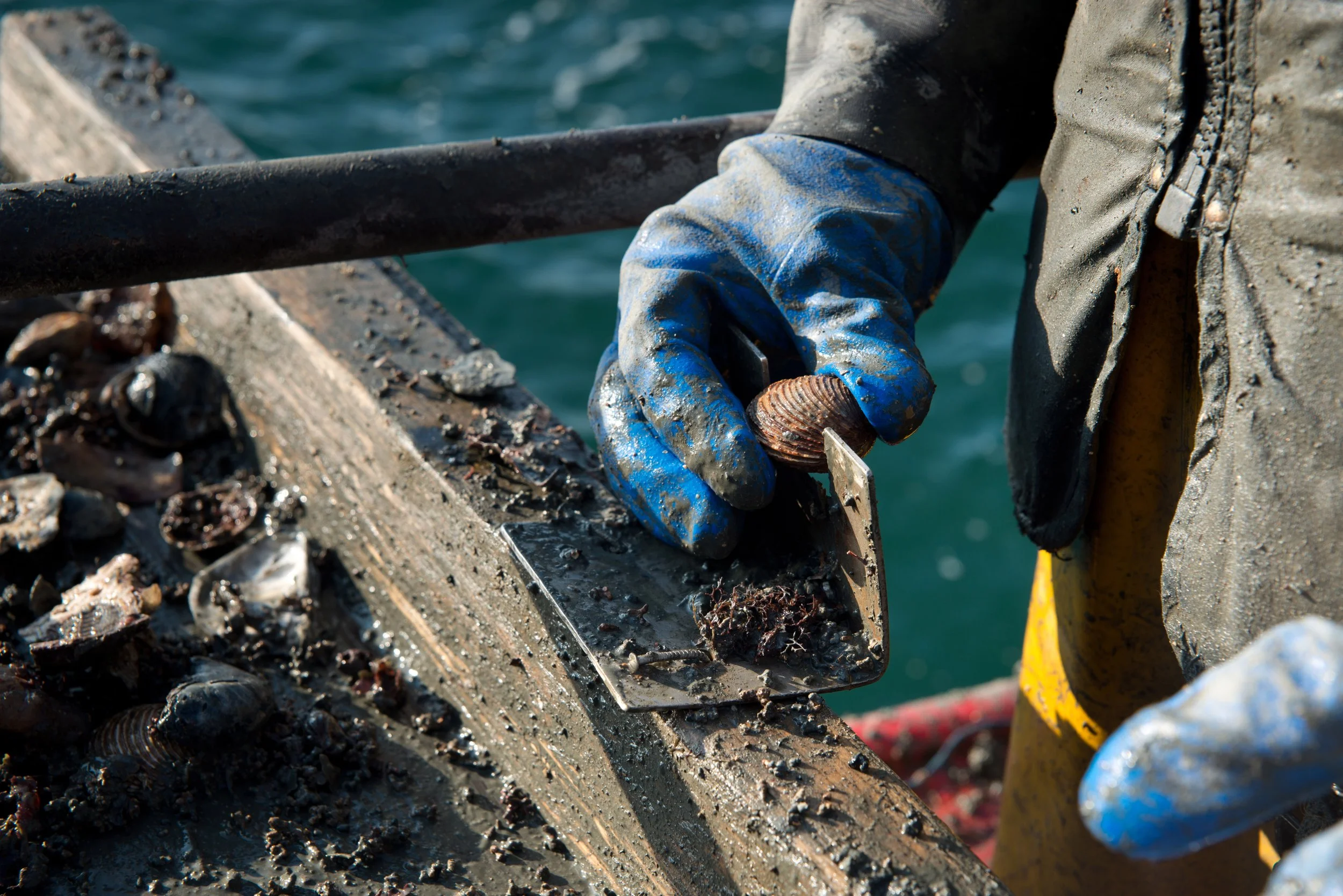
Image of shellfish aquaculture in Brest, France. Photo: Nicolas Job / Ocean Image Bank.
How Seafood Swaps Can Reduce Environmental Impact
One way to reduce pressure on marine ecosystems is to choose lower-impact species more often instead of relying mainly on heavily demanded fish. Replacing some conventional seafood choices with mussels, oysters, clams, or other responsibly produced bivalves can support a lower-impact food system, as these species require no external feed and can be integrated into systems that recycle nutrients from other forms of aquaculture.
A seafood swap is not automatically sustainable, however. Abotsi et al. (2024) have talked about how non-fed bivalve aquaculture has a different environmental profile from fed fish farming, while some aquaculture systems may depend on fishmeal, fish oil, fertilisers, or disease-control measures that create additional environmental problems.
For that reason, consumers should look beyond broad labels such as “seafood,” “farmed,” or “wild.” The most responsible choice may vary according to the species, the origin of the product, local environmental conditions, and the production or fishing method.
Over the years, many organizations have taken the initiative of creating web pages where consumers who are trying to eat more sustainably sourced seafood can find their answers. One of them is Seafood Watch, created by the Monterey Bay Aquarium. On this page, you will find what the best choices are, which alternatives could benefit your needs and the environment, and what to avoid.
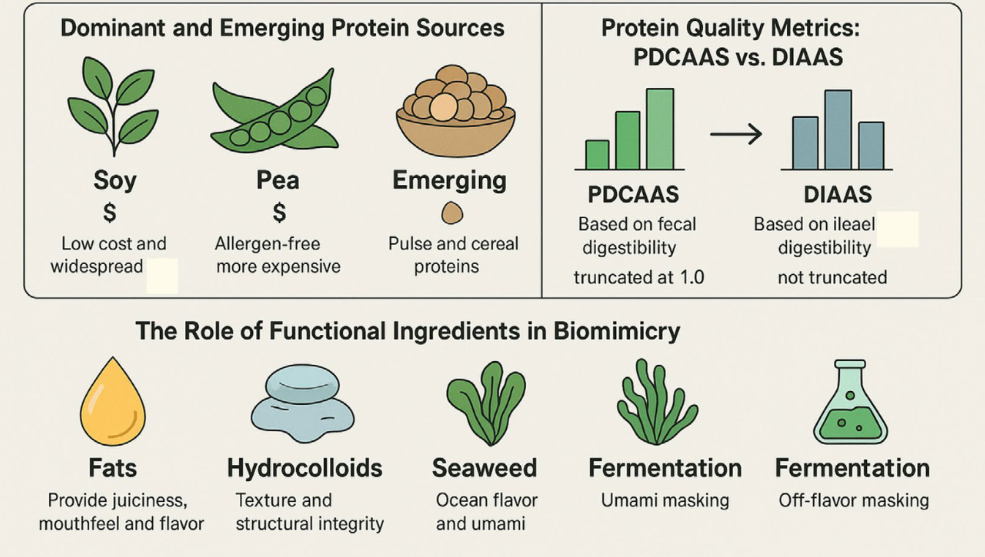
An overview of protein and functional ingredients used in plant-based fish analogues. Obtained from: https://doi.org/10.1111/jfpe.70365.
Beyond the Ocean: the Rise of Plant-Based Seafood
Plant-based seafood alternatives are designed to imitate popular products such as tuna, shrimp, salmon, fish fillets, crab, and other seafood, and are commonly made from ingredients such as pea, soy, chickpea, rice, and algae proteins.
Their main potential advantage is that they could help reduce pressure on wild fisheries and aquatic ecosystems. These alternatives may also appeal to consumers who want to avoid animal products or are concerned about contaminants associated with conventional seafood, such as mercury and microplastics.
However, research emphasizes that these health claims should not create a “health halo,” because many products still have nutritional limitations. These include lower protein quality, insufficient omega-3 fatty acids and micronutrients, higher salt levels in some products, and difficulties reproducing the texture, aroma, and flavor of real seafood. Advanced technologies can improve texture, but some remain expensive, difficult to scale, or unsuitable for large-scale production.
Still, if you are looking to reduce your seafood consumption and take your part in reducing some of the pressure marine ecosystems are feeling, looking into plant-based options may be a great idea!
What Does the Future of Sustainable Seafood Look Like?
Research these days points toward a more varied seafood system rather than one universal answer. Consumers do not necessarily need to stop eating seafood, but they can make more informed choices by considering lower-impact species, plant-based alternatives, supporting responsible production, and increasing the diversity of seafood they eat.
Mussels, oysters, and other bivalves can contribute to sustainable diets, while plant-based alternatives may provide additional options for reducing pressure on wild fisheries. Neither approach is perfect: shellfish farming remains vulnerable to environmental change, and plant-based products still need improvements in nutrition, taste, texture, affordability, and scalability.
The broader message is that healthier oceans will require several strategies working together: smarter consumer choices, greater species diversity, improved aquaculture management, and continued innovation in plant-based seafood.
Seas the Day investigates current and future conservation efforts being used to combat the issues facing our ocean
Look out for more Seas the Day articles from Maia Michelis and follow her on Instagram and LinkedIn.
Want to write for us? Check out our ‘Get Involved’ section.