
Fishers in New South Wales Leading Charge to Reduce Whale Entanglements
Aliya Siddiqi
A new film by OceanWatch Australia highlights innovative efforts by commercial fishermen to coexist with booming humpback population.
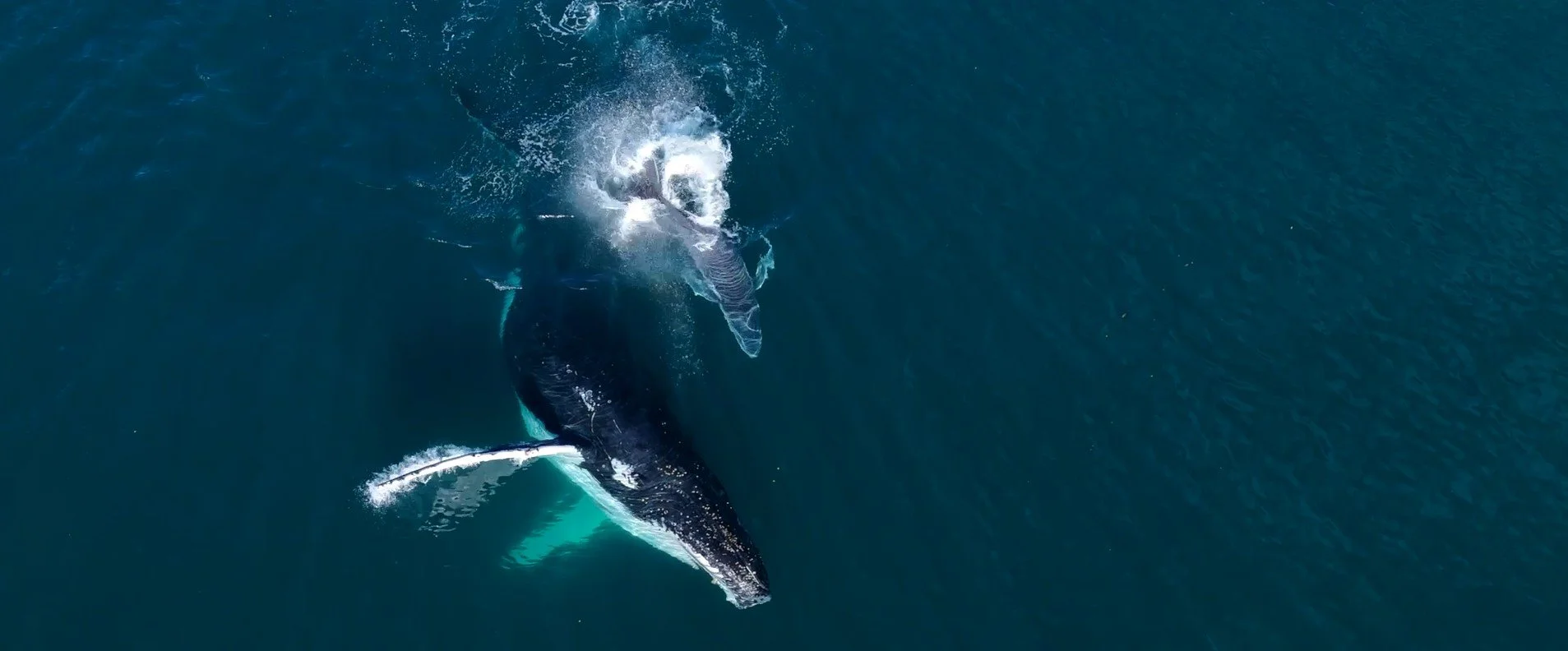
Mother humpback whale with calf. Photo: Kristin Hoel / OceanWatch Australia.
In a recent conservation success story, the population of humpback whales (Megaptera novaeangliae) along Australia’s east coast have returned in abundance after being hunted to near extinction in the mid-twentieth century. However, a new challenge has emerged between these curious creatures and commercial fishers.
The whales’ migration path along the coastline puts them in close contact with professional fishing gear. As more whales travel the coast each year, the likelihood of entanglement is a growing threat. Whales have been documented struggling with ropes or lines wrapped around their bodies. This can cause extreme distress, amputation, or even death.
Fishers Are at The Heart of The Solution
A recent film by OceanWatch Australia has offered a different perspective into this management challenge, sharing the stories and innovation of commercial fishers - voices not often heard by outsiders.
While the nonprofit works in various ways to support seafood sustainability across Australia, their Whale Entanglement Mitigation Program was actually an initiative started by New South Wales commercial fishers themselves.
“[This film] is trying to shed light on the fact that there are people in the industry who are super engaged in trying to find solutions here. Because they're the ones who are actually driving all of the gear trials, and they say ‘This is what we want to try next or this is how we want to do it’”, shares Kristin Hoel, Program Manager of OceanWatch’s Whale Entanglement Mitigation Program and producer on the film.
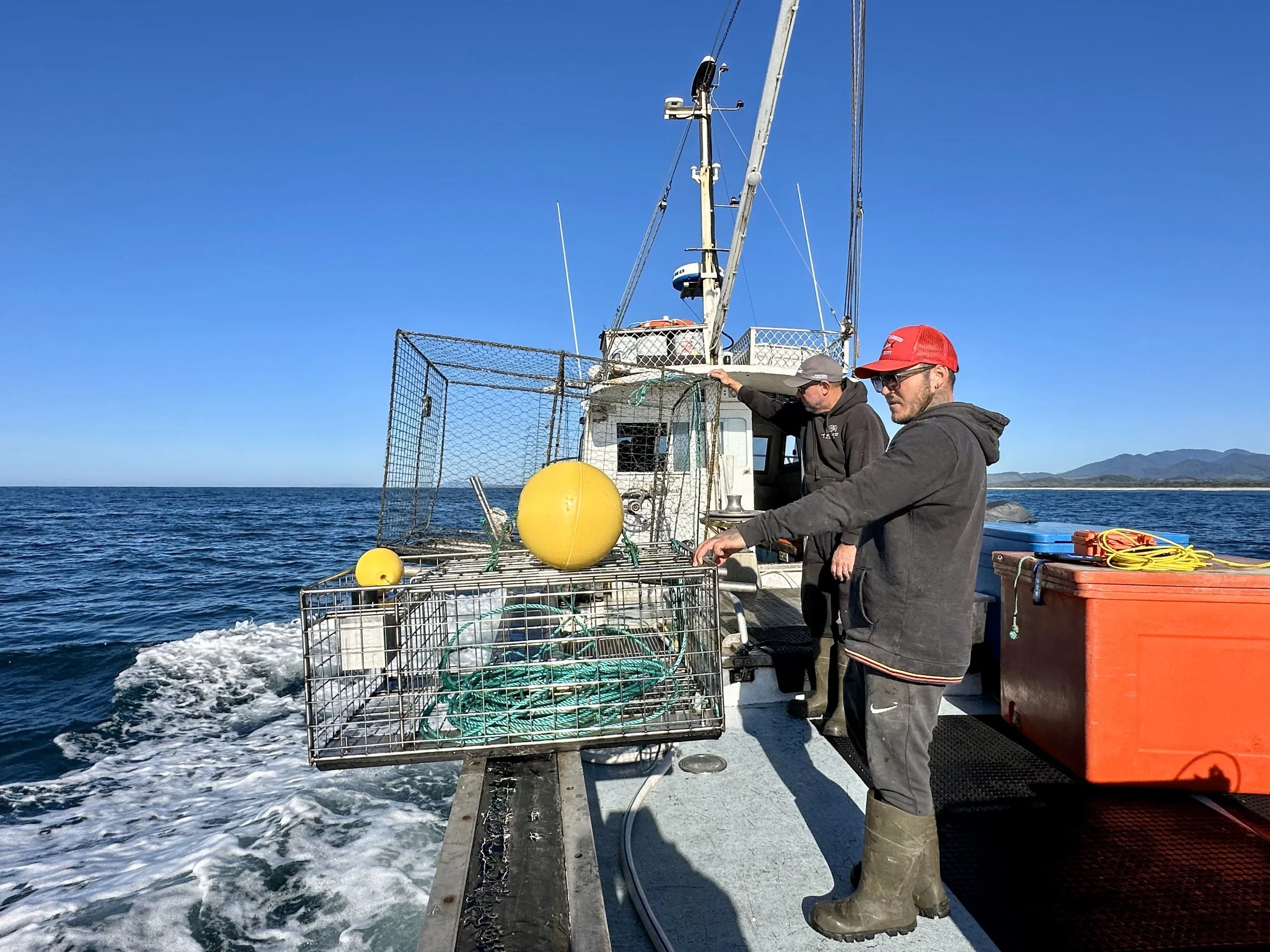
Fishers are trialling new gear to prevent entanglement. Photo: Kristin Hoel / OceanWatch Australia.
Despite the typical media narrative, Kristin shared that most of the fishers she works with want to keep their distance from the whales. None want to see whales suffering.
The fishers can also be affected by serious financial losses through destruction or loss of fishing gear. Most of the fishers involved in the program are ocean trap and line fishers. They would typically use traps with a rope leading to a buoy at the surface. This was one of the gear types identified by NSW Fisheries and the National Parks and Wildlife Service as a primary source of entanglement when the program began.
“My first workshop, I was really surprised when I had all of these fishers and national parks and the fisheries management teams in the same room.” Kristin recalls, “Everybody was working really cohesively together having some very productive and somewhat uncomfortable conversations, but also recognising that those are the conversations that really need to be had if you're going to make any headway in this space.”
Learning and Collaborating to Prevent Whale Entanglement
Those efforts and the initial investment into the program allowed fishers to travel over to North America to learn about different technologies that were being used there. They were able to collaborate with companies to adapt existing gear options and trial them in their fishing efforts back in Australia.
The film highlights the localised context for gear preferences and needs, and that there is not a singular solution for every fishing operation.
Beyond serving the needs of seafood lovers, Kristin notes the innovative nature of fishers and their engineering capabilities when it comes to trialling new technology. Their decades-long knowledge of the sea and countless hours on the water can also provide additional observational understanding of whale behaviour for researchers.
While entanglement for whales is a global problem, OceanWatch and NSW fishers are trying to lead the way in finding sustainable solutions that can benefit both ocean creatures and their livelihoods.
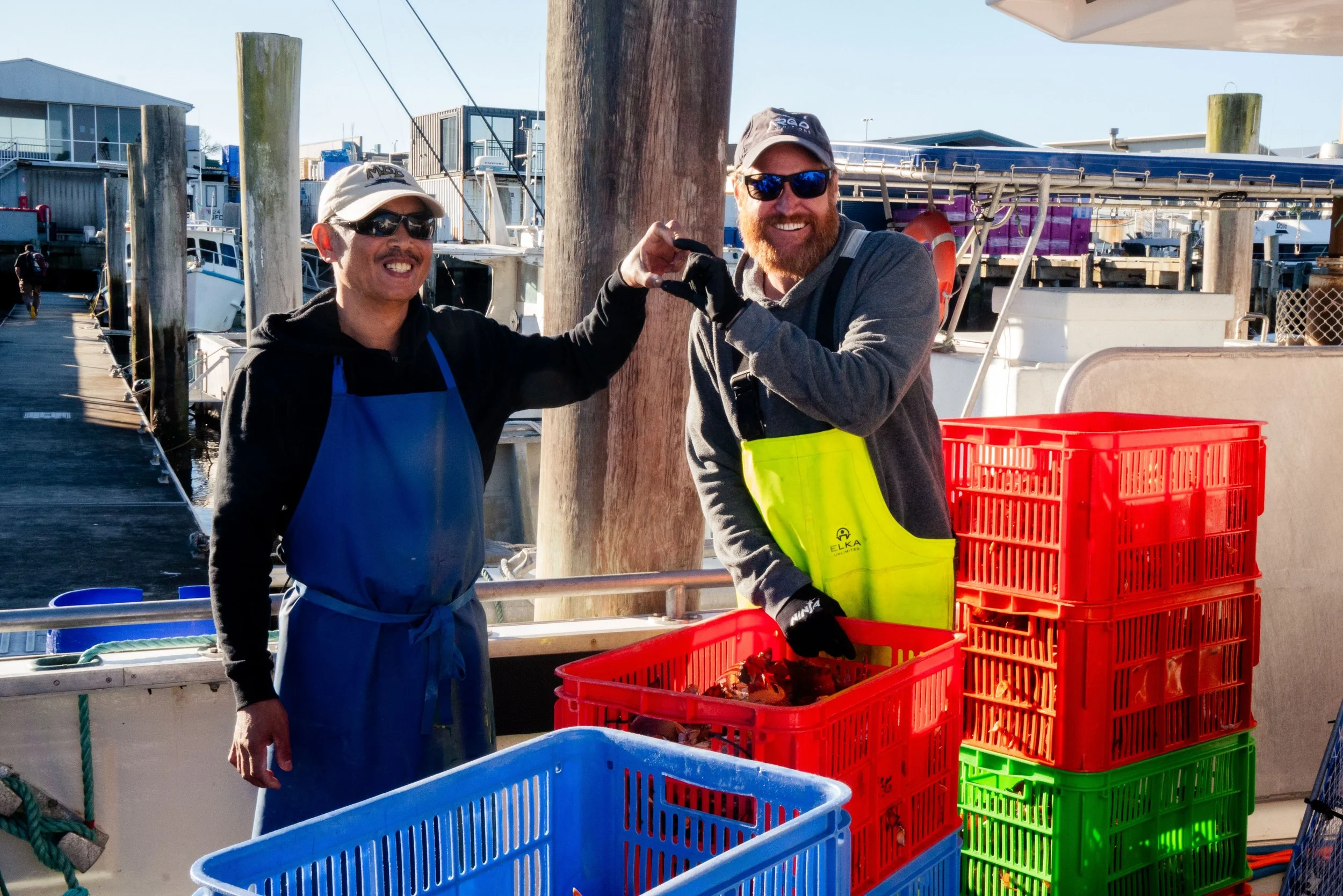
Fishers are at the heart of the solution. Photo: Kristin Hoel / OceanWatch Australia.
Thank you to Kristin Hoel for sharing insights into the program. Learn more about Kristin’s work and how she got into working on whale entanglement mitigation on the Big Fight Blue Soul podcast.
Learn more and check out the film, Sharing the Humpback Highway, on YouTube.
OceanWatch Australia is currently seeking donations to help support and continue investment into the project. Donate here.
Note: if you come across an entangled whale, do not attempt to disentangle it. Please call your local wildlife services or marine mammal hotline, take photos if possible, and note both its current location and the direction it is heading.
Blue Missions showcases the work of marine organisations dedicated to protecting our ocean
If you’ve enjoyed this article about Oceanwatch australia, you can follow them on instagram, or visit their website.
Look out for more Blue Missions articles from aliya siddiqi and follow her on instagram.
Want to be interviewed by us? Check out our ‘Get Involved’ section.